A charcoal made through pyrolysis, a process where organic materials like excess timber is heated without any oxygen, breaking these materials down into a stable form of carbon.
Why is it relevant?
It’s essentially like a time capsule for carbon!
Biochar is popular for its carbon sequestration potential and climate benefits, including reducing greenhouse gases, improving soil, and managing waste.
Why is it relevant?
It’s essentially like a time capsule for carbon!
Biochar is popular for its carbon sequestration potential and climate benefits, including reducing greenhouse gases, improving soil, and managing waste.
Characteristics of Biochar
Characteristics of Biochar
At TerraBaru, we’re regenerating more than just soil— we’re reshaping industries. Our impact spans across:
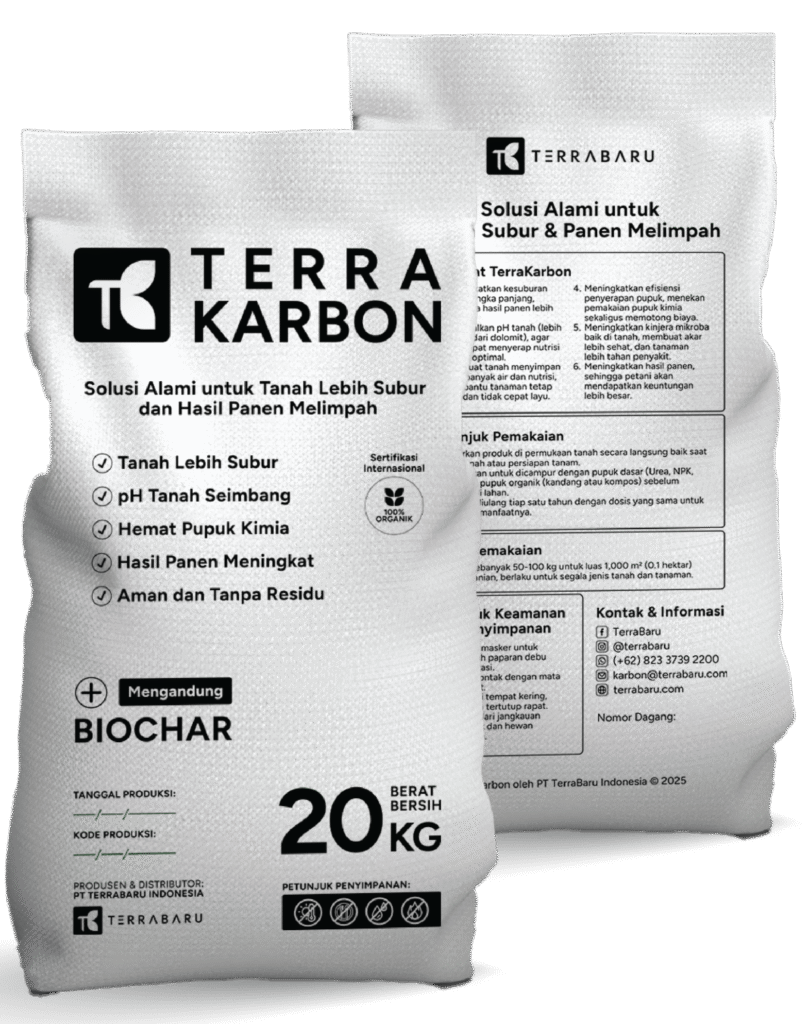
Our Engineered Biochar: TerraKarbon
TerraKarbon is a stable, carbon-rich material with wide-ranging benefits for sustainable agriculture. Its core component, Biochar, is produced to international standards through the pyrolysis of organic waste.
TerraKarbon comes in distinct types based on agricultural waste sources:
Rice Husk Biochar
Sawdust Biochar
Corncob Biochar
Coffee Husk Biochar
Cocoa Pods Biochar
Palm Oil EFB Biochar
Palm Oil Trunks Biochar
At TerraBaru, we’re regenerating more than just soil— we’re reshaping industries. Our impact spans across:
Our Products: TerraKarbon
TerraKarbon is a stable, carbon-rich material with wide-ranging benefits for sustainable agriculture. Its core component, Biochar, is produced to international standards through the pyrolysis of organic waste.
TerraKarbon comes in distinct types based on agricultural waste sources:
Rice Husk Biochar
Sawdust Biochar
Corncob Biochar
Coffee Husk Biochar
Cocoa Pods Biochar
Palm Oil EFB Biochar
Palm Oil Trunks Biochar
At TerraBaru, we’re regenerating more than just soil— we’re reshaping industries. Our impact spans across: